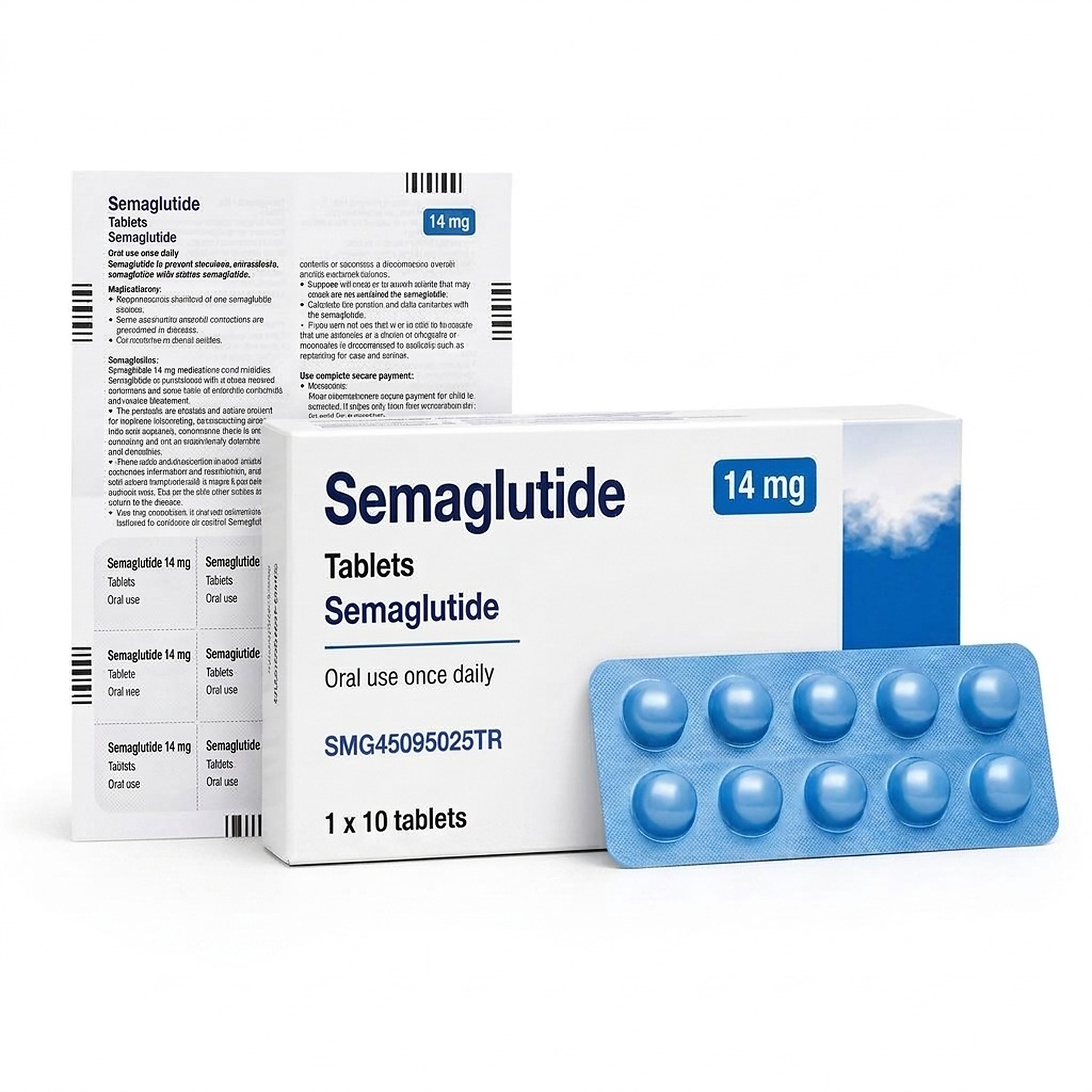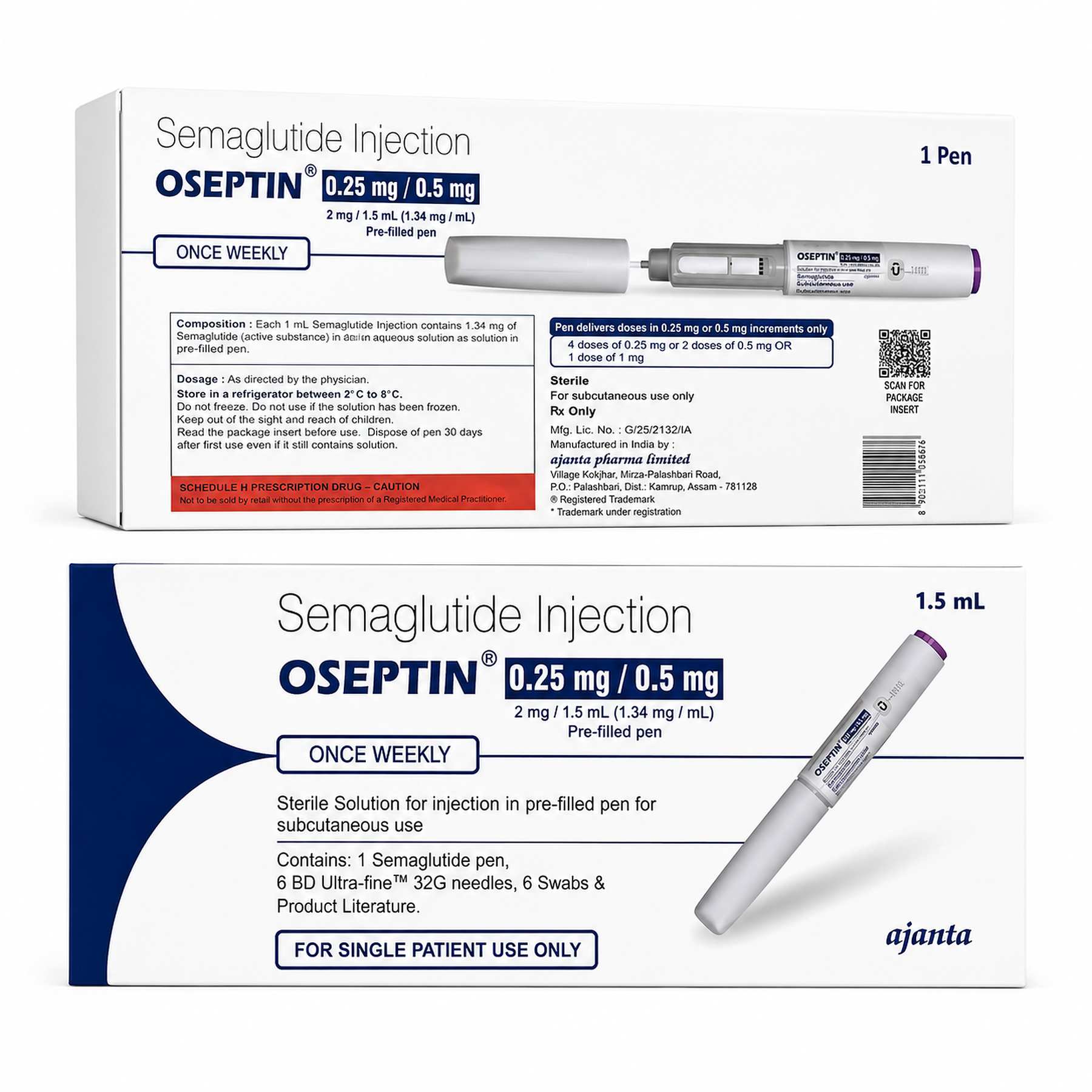
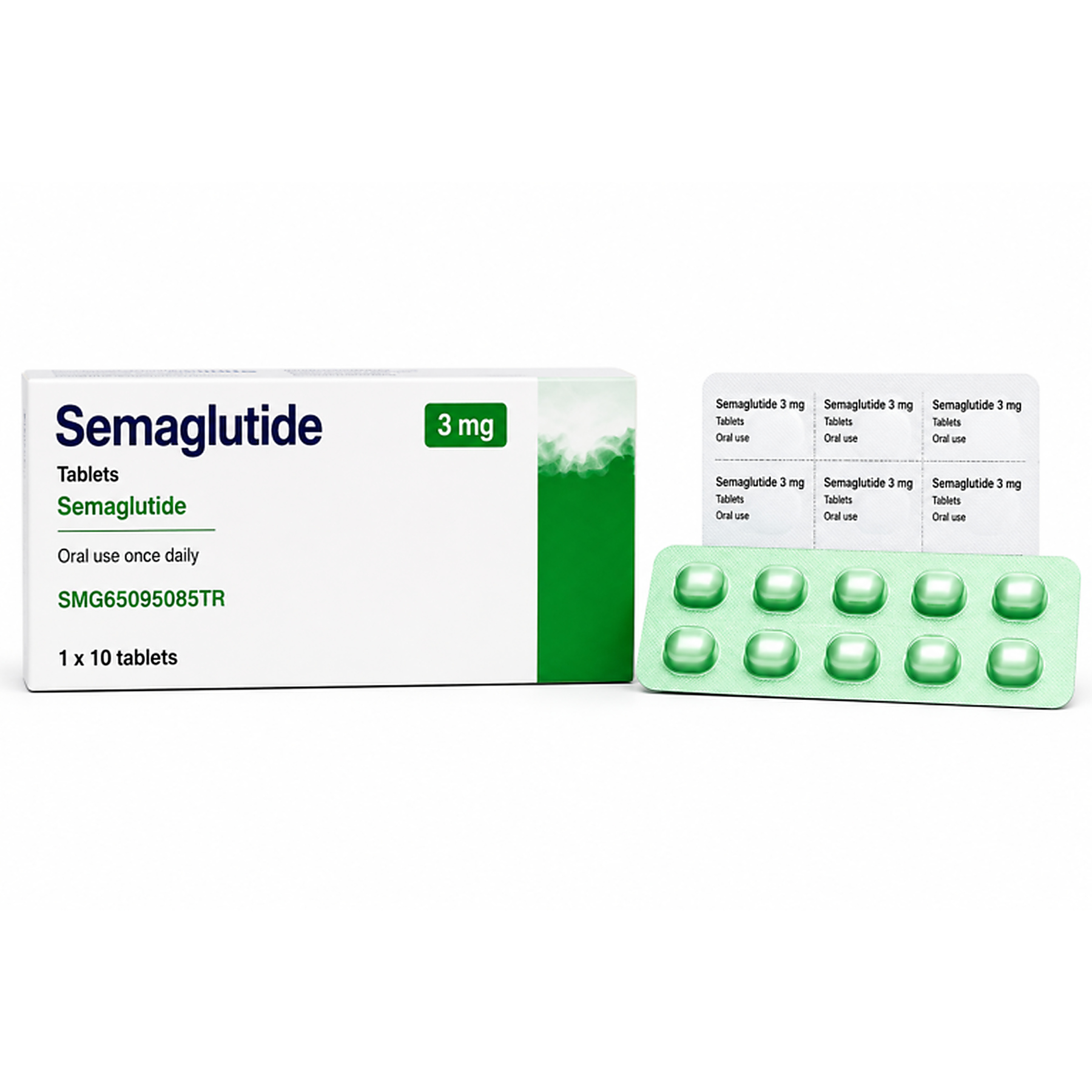
Why the tablet number is larger
A weekly injection is given under the skin and absorbed from there. A tablet has to pass through the stomach, which breaks most of the dose down. Oral semaglutide is made with an absorption helper, called SNAC, so that a small share of the tablet still gets through. The milligram printed on a tablet is the amount swallowed, not the amount that arrives in the blood.
That is why a daily tablet can read 14 mg or 25 mg while a weekly pen, at the top of its own scale, reads 2.4 mg. The larger figure is the amount needed for that route. It is not, by itself, proof of a stronger effect.
Three strength lists
These lists belong to different products.
Daily tablets long used for type 2 diabetes come in 3 mg, 7 mg, and 14 mg. On that list, 3 mg is the starting strength and 14 mg is the top.
A newer daily tablet, approved in December 2025 for weight management, comes in 1.5 mg, 4 mg, 9 mg, and 25 mg. On that list, 25 mg is the usual maintenance strength.
Weekly injections use another list. A common adult pen scale is 0.25 mg, 0.5 mg, 1 mg, 1.7 mg, and 2.4 mg. Other pens and vials use further strengths. Each of those numbers is a weekly injection dose.
A 3 mg diabetes tablet is a whole tablet made at that strength. It is a start on the diabetes-tablet list. It is not a piece of a 14 mg tablet, and it is not a piece of a 25 mg tablet. Cutting tablets, or stacking them, to imitate a strength from a different list is outside the way these products are made.
Who sets the strength
A prescriber chooses the product for the reason it is being used, then moves along that product’s own list. The early steps exist because stomach effects are common when semaglutide is started. Nausea, vomiting, diarrhea, constipation, and stomach pain are the effects people report most often, with the tablet and with the pen.
The tablet is also meant to be taken apart from food. Food in the stomach blocks the small amount that would otherwise be absorbed. The gap between the tablet and the first food, drink, or other medicine is printed on the leaflet for that exact product.
This note does not set a schedule.
One route at a time
A tablet and a pen on the same day are two doses of the same ingredient. A diabetes tablet and a weight-management tablet are also separate products, even though both say semaglutide. If the name or the strength on the box differs from what was prescribed, the useful next step is to ask the prescriber before taking it.
What a prescriber weighs first
Semaglutide is a prescription medicine, not a supplement. Product labels carry a warning about a rare thyroid tumor for people with a personal or family history of medullary thyroid carcinoma, or with multiple endocrine neoplasia syndrome type 2. Care is also reconsidered if pancreatitis or gallbladder disease is suspected, or if vomiting and diarrhea are severe enough to cause dehydration. People who also use insulin or a sulfonylurea can have low blood sugar more easily. For weight-management use, pregnancy is a reason treatment is stopped.
What the October figures do not show
That prescription study counted new fills. It could not follow one person moving from a pen to a tablet, and it did not include compounded semaglutide. Fast uptake means many people started a tablet. It does not mean every semaglutide tablet is the 25 mg weight-management product, or that a tablet is suitable for everyone who has read about it.
This note is general information for reading. It is not a dosing guide, a diagnosis, or personal medical advice.
This page is general information. Use medicines only as a qualified clinician directs, and follow import rules in your country.
Continue in Semaglutide
Pack prices include tracked delivery to the United States, the United Kingdom, Australia and New Zealand. Recipients remain responsible for local import rules. Products in this note: Semaglutide Injection 0.25 mg–0.5 mg, Semaglutide Injection 1 mg, Semaglutide Injection 2 mg, Semaglutide Injection 4 mg, Semaglutide Tablets 3 mg, Semaglutide Tablets 7 mg, Semaglutide Tablets 14 mg.