Azelaic acid is a skin ingredient people look up for redness, blemishes, and uneven tone. Cosmetic serums use low percentages. A 20% cream is a different product: a leave-on medicine a clinician uses for certain acne, for some rosacea, and for some darker patches of skin.
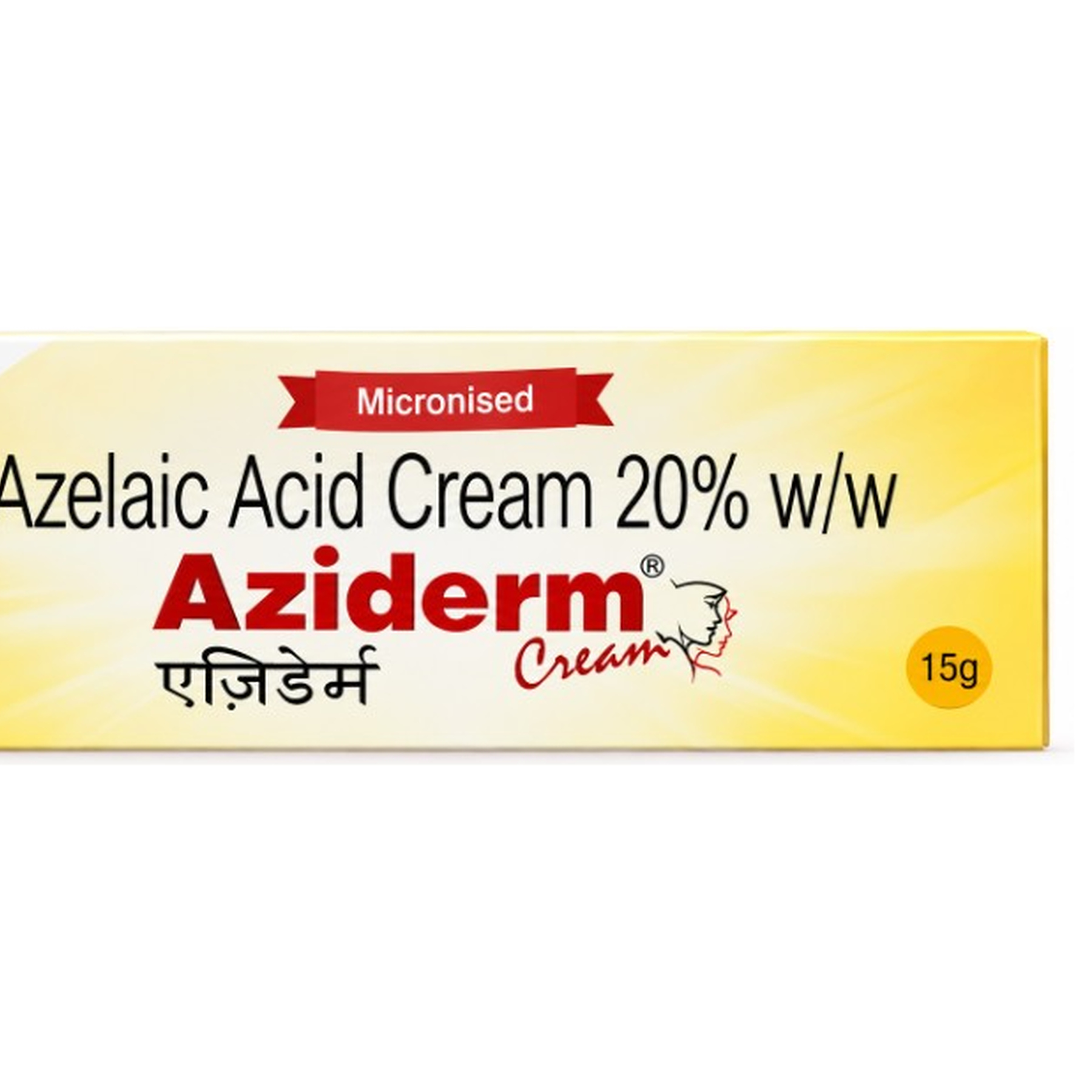
Aziderm Cream 20% is micronised azelaic acid 20% in a 15 g tube. This note is general information about that strength. A licensed clinician decides whether it belongs on a particular person’s skin.
What the 20% strength means
Azelaic acid is made in washes, low-strength serums, and prescription-style creams. The percentage on the tube is the amount of azelaic acid in the cream. Twenty percent is the strength studied for acne and for melasma, which is darker patches, often on the face.
A 20% cream is still a medicine for the skin a clinician has chosen to treat. It is not a face wash, and it is not a product for lightening skin that has no pigment problem.
Acne and redness
In acne, azelaic acid is used because it acts on the bacteria involved and on the way skin cells shed inside a pore. Clinicians also use it when redness from rosacea is part of the picture.
People often find it when salicylic acid or a cosmetic acid has not matched the concern they actually have. Acne with redness, and rosacea, are the usual reasons a 20% cream comes up in a clinic. The cream can sting, itch, or dry the skin in the first days. That reaction is a reason to ask the prescriber, not a sign to cover more of the face.
Uneven tone
Melasma and other dark patches are a separate use. Azelaic acid can slow the formation of new pigment in skin a clinician is treating. Reviews of melasma care also discuss hydroquinone and tretinoin, including creams that combine those with a mild steroid. Those are different medicines. Azelaic acid 20% has been compared with hydroquinone 2% and with hydroquinone 4%. Results depend on the study and on the person. None of this makes a 20% cream a general lightener for unaffected skin.
Sun on the face is part of why dark patches return. A clinician usually talks about daylight protection alongside any pigment cream.
Aziderm
Aziderm is the brand name on this 20% cream. The pack is labelled micronised, which describes how finely the azelaic acid is milled in the cream. Each tube is 15 g of the same 20% cream. A second tube is the same strength.
Tretinoin and hydroquinone creams
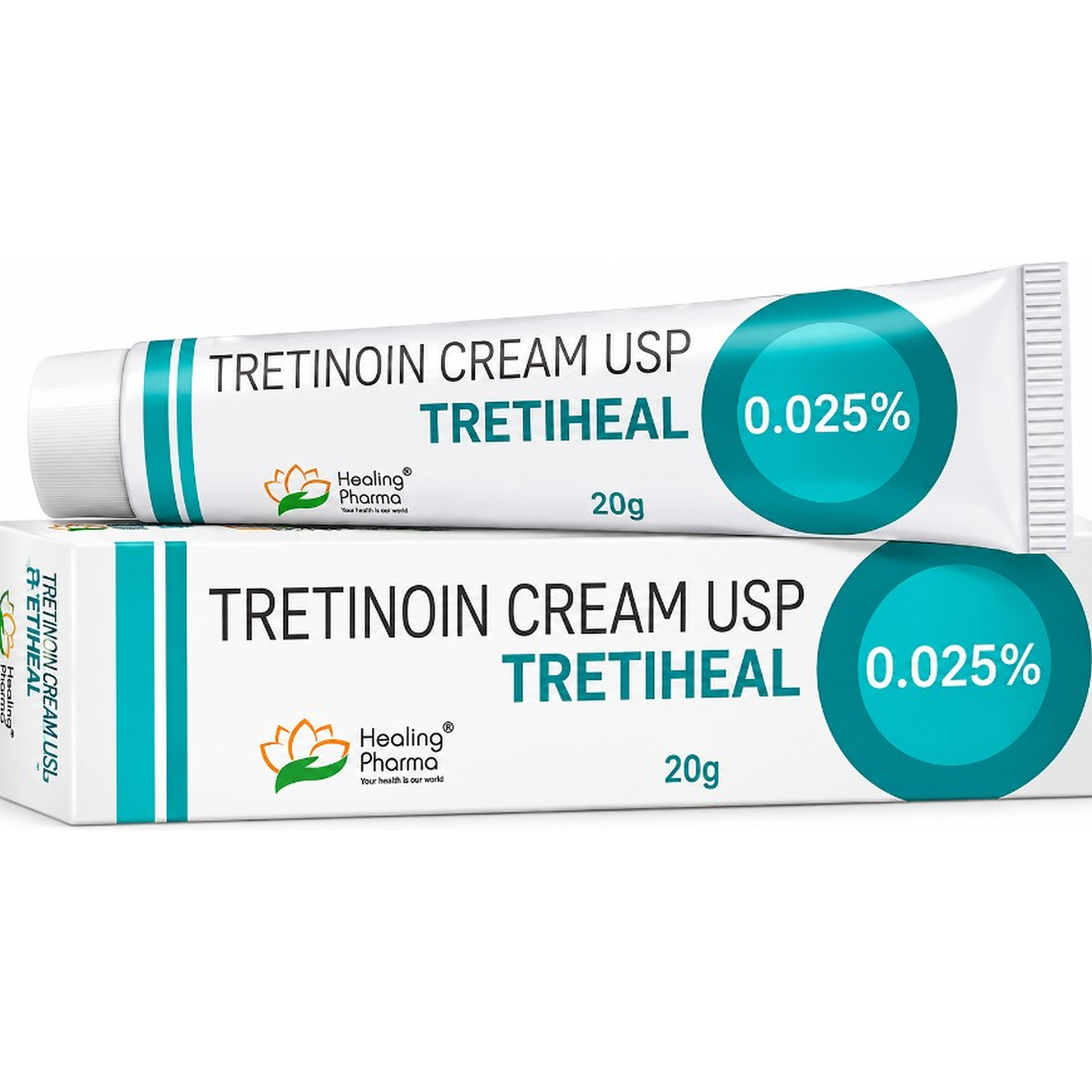
Tretinoin Cream 0.025% and Tretinoin Cream 0.05% are retinoid creams. Tretinoin speeds turnover of skin cells. Clinicians use it for acne and for some sun-damaged skin. It is a different drug from azelaic acid. The two percentages are two strengths of tretinoin, not two names for the same tube.
Triluma Cream combines hydroquinone 4%, tretinoin 0.05%, and fluocinolone acetonide 0.01%. Clinicians use that kind of combination for certain dark patches, such as melasma. Hydroquinone, tretinoin, and the steroid are three drugs in one cream. Aziderm is azelaic acid alone.
People search “azelaic acid vs tretinoin” because both appear in acne and pigment conversations. They are not substitutes a person swaps by the percentage on the carton. Pregnancy, eczema, broken skin, and other retinoid or steroid creams are details a clinician needs before either product is used. Hydroquinone and tretinoin are often avoided in pregnancy.
What the skin may do
Azelaic acid can sting or itch, especially at the start. Tretinoin more often reddens and peels the treated skin, and treated skin burns more easily in daylight. Severe swelling, blistering, or a spreading rash needs care. Keep these creams off the eyes, the mouth, and open skin.
This page is general information. Use medicines only as a qualified clinician directs, and follow import rules in your country.
Continue in Skin and Hair
Pack prices include tracked delivery to the United States, the United Kingdom, Australia and New Zealand. Recipients remain responsible for local import rules. Products in this note: Triluma Cream, Aziderm Cream 20%, Minoxidil 5 mg Tablets, Tretinoin Cream 0.025%, Tretinoin Cream 0.05%.